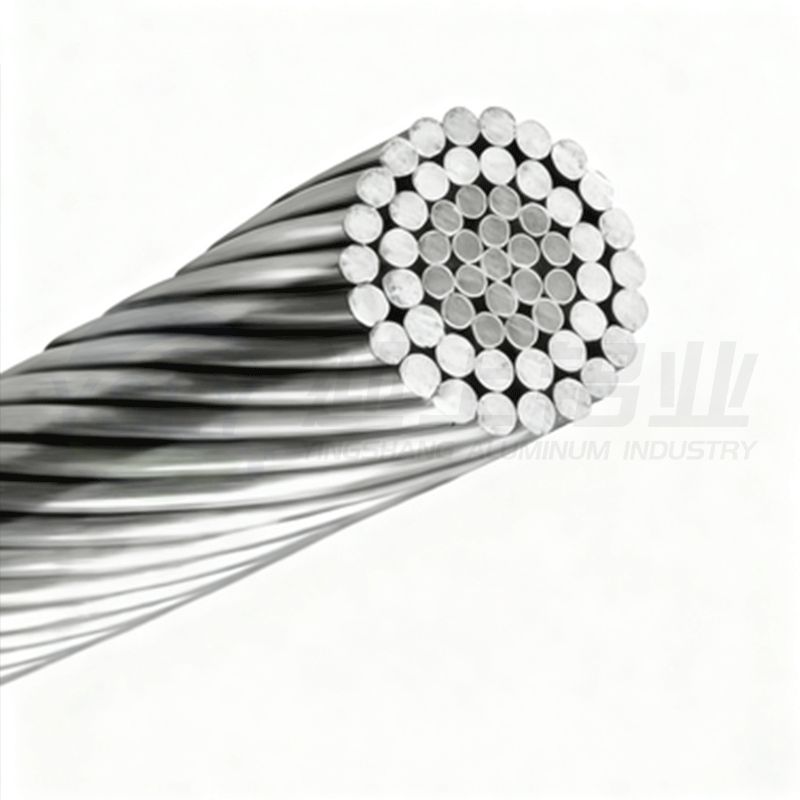
Choosing between AAC (All Aluminum Conductor) and ACSR (Aluminum Conductor Steel Reinforced) can be daunting for manufacturers and distributors in the electrical industry. Both materials possess unique properties tailored for different applications. In this article, we will clarify the distinction between these two conductor types to help you decide effectively. We will explore their differences, advantages, and the factors that should influence your selection, backed by data and real-world scenarios.
AAC and ACSR are widely used conductors in overhead power transmission. Understanding their differences aids in choosing the right product for your electrical needs.
AAC is composed entirely of aluminum, offering a lightweight solution ideal for certain applications. On the other hand, ACSR consists of aluminum strands surrounding a core of steel, enhancing strength and tensile performance.
ACSR has superior mechanical strength compared to AAC due to its steel core, making it suitable for longer spans or areas with harsh weather conditions.
AAC offers excellent resistance to corrosion because of its pure aluminum composition, while the steel core in ACSR may require protective coatings, especially in coastal areas.
From a cost perspective, AAC is generally lower in price compared to ACSR owing to its simpler manufacturing process. However, ACSR may prove cost-effective in the long run in areas requiring robust structure.
The lighter nature of AAC allows for easier handling and installation, which can lead to reduced labor costs in certain projects.
AAC conductors excel in specific applications due to their distinct properties.
Due to its aluminum composition, AAC is notably lightweight, making it suitable for installations where weight is a critical factor.
AAC offers excellent electrical conductivity, making it ideal for short-distance transmission, particularly in urban areas.
The corrosion resistance of AAC minimizes the maintenance cost, providing an advantage in long-term applications.
ACSR conductors present several advantages that may suit specific project needs.
The steel core provides enhanced tensile strength, allowing ACSR to span longer distances without sagging.
ACSR is well-suited for areas prone to extreme weather, where its robust nature ensures reliability and safety.
Under high-load conditions, ACSR tends to maintain performance better, making it favorable for utilities that impose high electrical demands.
Selection between AAC and ACSR should be guided by several critical factors.
Consider whether the installation area has extreme weather conditions or corrosive environments, which may favor ACSR over AAC.
For longer spans, ACSR is often preferable due to its higher tension capabilities.
AAC may be more cost-effective for short-distance applications, whereas ACSR may justify its cost with extended durability and performance.
Real-world applications demonstrate when to utilize AAC versus ACSR effectively.
AAC is frequently chosen in urban installations where weight and cost considerations are critical.
ACSR is frequently used in rural overhead lines, where longer spans and resistance to environmental stresses are crucial.
For projects in coastal areas, ACSR with protective coatings becomes essential due to potential corrosion.
In summary, the choice between AAC and ACSR depends heavily on application standards and environmental conditions. While AAC is lightweight and offers excellent conductivity for specific applications, ACSR’s strength and durability make it a suitable choice for harsher environments. Understanding these differences will enable manufacturers and distributors to make informed decisions to meet their project requirements effectively.
 Yingshang Conductor" />
For more information about conductors or other products, feel free to reach out to Yingshang.