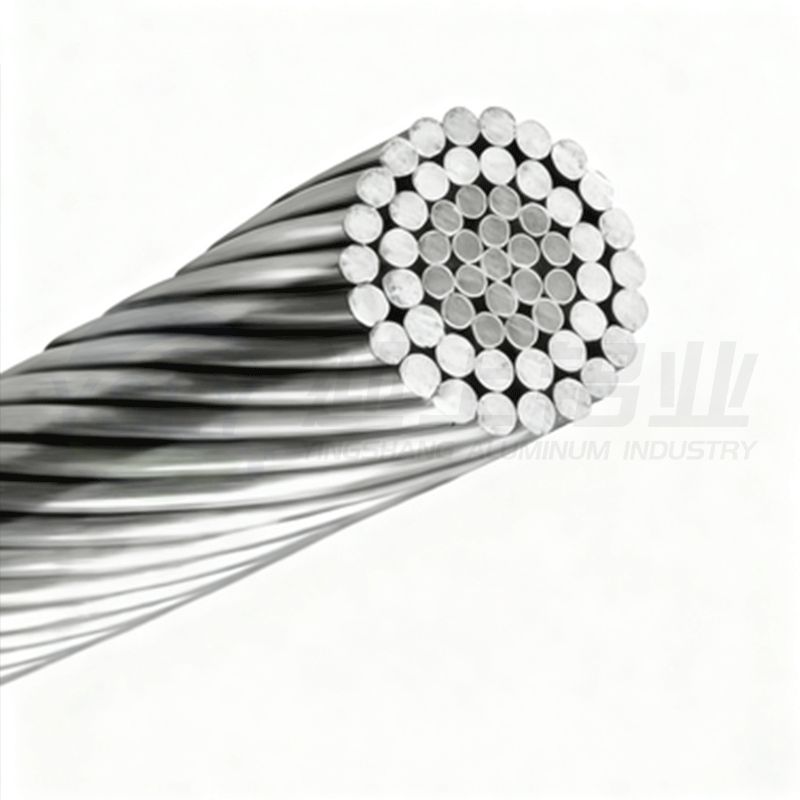
What is the use of AAAC conductor? Understanding the differences between AAAC and ACSR conductors is crucial for many projects. These conductors play a vital role in electrical transmission systems. Both conductors have unique properties suited for different environments. Knowing when to use each type of conductor can save time and costs. This article will clarify these differences for better decision-making. 
**AAAC (All Aluminum Alloy Conductor) is primarily used in overhead power transmission lines. Its lightweight and corrosion-resistant nature make it appropriate for challenging environments. In contrast, ACSR (Aluminum Conductor Steel Reinforced) features a steel core, providing strength for longer spans.**
AAAC is made entirely of aluminum alloy, which offers good conductivity and corrosion resistance. ACSR, however, combines aluminum with a core of steel, which increases its tensile strength.
AAAC conductors are lighter than ACSR conductors. This allows for easier handling and installation, especially in remote areas.
AAAC conductors are typically used in urban settings, where environmental factors like corrosion are a concern. ACSR is commonly employed in rural transmission lines due to its strength over long distances.
Generally, AAAC conductors are more expensive than ACSR conductors. While the higher initial cost of AAAC can be a downside, the durability can lead to lower maintenance costs in the long run.
AAAC conductors have better thermal performance in high-temperature environments. ACSR can suffer from thermal expansion, which may affect its performance.
In conclusion, understanding the use of AAAC conductor is vital for selecting the right type for specific applications. While both AAAC and ACSR have their advantages, AAAC is typically favored in challenging conditions due to its lightweight and resistance to corrosion. Choose carefully based on project needs to ensure reliable electrical transmission.