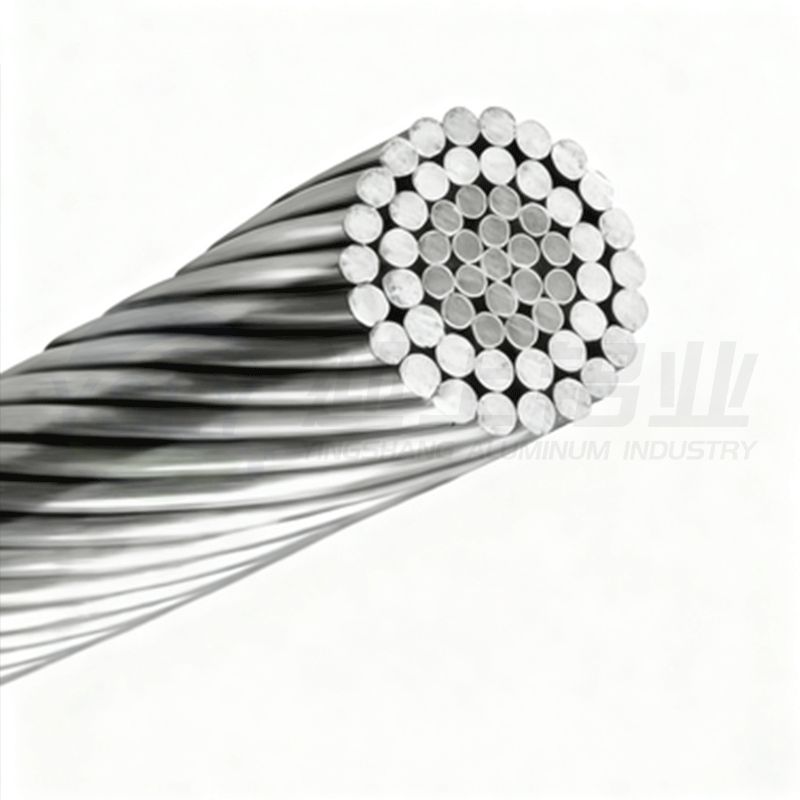
Product Description
When building or upgrading power distribution systems that need to balance performance, cost, and ease of installation, AAC (All-Aluminium Conductor) is the industry’s trusted choice. Crafted from high-purity aluminum, this conductor brings together the best of aluminum’s natural strengths—light weight, excellent conductivity, and durability—making it perfect for low to high-voltage overhead projects, from rural mountain grids to urban neighborhoods and factory floors.
Whether you’re looking to minimize installation costs, reduce tower load, or deploy a large-scale distribution network, AAC conductor delivers consistent, reliable performance without compromising on quality — and is widely supplied by Yingshang Aluminum Industry as a dependable bare conductor supplier.
Round Aluminum Conductor (AAC) is a circular cross-sectional conductor made of high-purity aluminum (usually ≥ 99.5% purity) through drawing and twisting. With its lightweight, low cost, and easy processing characteristics, it has become the basic type of conductor for low-voltage to high-voltage overhead power transmission and is widely used in power grid construction and distribution systems.
AAC Conductor, short for All-Aluminium Conductor, is a circular cross-section power cable manufactured through precision drawing and concentric stranding of high-purity aluminum (≥99.5% purity). Its core design follows a "1-center + outer layer surrounding" stranding structure, with common strand counts of 7, 19, or 37 (increasing as the conductor’s cross-section grows).
This simple yet robust design leverages aluminum’s inherent advantages to solve key pain points: it’s lighter than copper, more affordable than alloy conductors, and easy to process—making it the basic workhorse for overhead power transmission and distribution systems worldwide.

Every AAC conductor is engineered for stability, conductivity, and long-term use. Here’s a breakdown of its key structural elements:
| Component | Details & Functions |
|---|---|
| Material | High-purity aluminum (≥99.5% purity) – ensures optimal electrical conductivity and ductility. |
| Stranding Design | Concentric stranding ("1-center wire + outer layers") – strand counts range from 7 to 37, adapting to different cross-section sizes and load requirements. |
| Appearance | Circular cross-section, smooth surface (no bumps or dents), and uniform stranding pitch – guarantees mechanical stability and consistent power flow. |
AAC conductor stands out for its practical, project-friendly advantages that directly translate to cost savings and efficiency:
To ensure safety and optimal performance, follow these key construction parameters:
AAC conductor’s versatility and cost-effectiveness make it the top choice for:
Perfect for low to high-voltage distribution networks in rural areas. Its lightweight design simplifies installation in mountainous or hard-to-reach locations, and its cost advantage supports large-scale deployment across villages and farmlands.
Used for 0.4kV power lines in residential areas, streets, and communities. Works seamlessly with transformers to deliver electricity directly to homes and small businesses, integrating easily with urban infrastructure.
Ideal for power lines below 10kV inside factories and industrial parks. Meets the regular electricity needs of motors, production equipment, and other industrial loads – reliable and cost-efficient for on-site wiring.
Choose from a wide range of cross-sections to match your project’s needs. Contact us for the full, detailed specification sheet.
|
Nominal cross section |
Number of conductors/single wire diameter |
Conductor structure |
First layer |
Second layer |
Third layer |
Fourth layer |
Control cross section (mm²) |
Weight per meter |
Standard resistance |
Internal control resistance |
||||
|
mm |
Reference mold |
Pitch |
Reference mold |
Pitch |
Reference mold |
Pitch |
Reference mold |
Pitch |
≤g/m |
≤Ω/km |
≤Ω/km |
|||
|
10 |
7/1.35 |
1+6 |
3.8 |
65-75 |
|
|
|
|
|
|
9.4 |
25.4 |
3.08 |
2.9876 |
|
16 |
7/1.71 |
1+6 |
4.7 |
75-90 |
|
|
|
|
|
|
15.2 |
41.1 |
1.91 |
1.8527 |
|
25 |
7/2.12 |
1+6 |
6 |
90-110 |
|
|
|
|
|
|
24 |
64.9 |
1.2 |
1.176 |
|
35 |
7/2.54 |
1+6 |
7 |
110-130 |
|
|
|
|
|
|
33.7 |
91.1 |
0.868 |
0.8506 |
|
50 |
10/2.54 |
2+8 |
8 |
120-140 |
|
|
|
|
|
|
46 |
124.3 |
0.641 |
0.6314 |
|
70 |
14/2.54 |
4+10 |
5.6 |
105-120 |
9.9 |
125-145 |
|
|
|
|
67 |
181.1 |
0.443 |
0.4364 |
|
95 |
19/2.54 |
1+6+12 |
7 |
130-145 |
11.6 |
150-170 |
|
|
|
|
92 |
248.7 |
0.32 |
0.3152 |
|
120 |
24/2.54 |
2+8+14 |
8.5 |
150-165 |
13 |
170-190 |
|
|
|
|
115 |
310.8 |
0.253 |
0.2492 |
|
150 |
30/2.54 |
4+10+16 |
5.7 |
120-140 |
9.8 |
155-170 |
14.5 |
180-205 |
|
|
143 |
386.5 |
0.206 |
0.2029 |
|
185 |
37/2.54 |
1+6+12+18 |
7 |
150-165 |
11.6 |
175-190 |
16.1 |
200-225 |
|
|
180 |
486.5 |
0.164 |
0.1624 |
|
240 |
48/2.54 |
3+9+15+21 |
10 |
190-210 |
14.2 |
215-235 |
18.5 |
235-255 |
|
|
235 |
635.2 |
0.125 |
0.1238 |
|
300 |
61/2.54 |
1+6+12+18+24 |
7 |
160-175 |
11.6 |
215-235 |
16.3 |
240-260 |
20.5 |
255-275 |
294 |
794.7 |
0.1 |
0.099 |
|
400 |
61/2.9 |
1+6+12+18+24 |
8.3 |
170-185 |
13.5 |
245-265 |
18.5 |
280-300 |
23.5 |
290-320 |
379 |
1024.4 |
0.0778 |
0.077 |
|
500 |
61/3.24 |
1+6+12+18+24 |
9.5 |
200-235 |
14.8 |
260-280 |
20.6 |
310-330 |
26.5 |
330-360 |
486 |
.1313.7 |
0.0605 |
0.0599 |
|
630 |
61/3.68 |
1+6+12+18+24 |
10.6 |
220-250 |
17.2 |
330-350 |
23.6 |
360-380 |
30 |
380-400 |
622 |
1681.3 |
0.0469 |
0.0464 |
We uphold strict quality control to ensure every AAC conductor meets global industry standards:
We understand every project is unique. We offer:
Cost-Saving: Affordable material and lightweight design cut material, transportation, and labor costs.
Easy to Install: Low weight reduces tower load and on-site work difficulty – perfect for remote areas
Reliable Performance: High-purity aluminum ensures stable conductivity and natural corrosion resistance.
Versatile: Fits rural, urban, and industrial low-voltage distribution needs.
Quality Guaranteed: Complies with international standards and undergoes strict factory inspections.
Ready to build a cost-effective, reliable power distribution system with AAC conductor? Fill out the form below or contact us directly for a free quote, full specification list, or technical consultation. Our team will respond within 24 hours!